
If it’s been a while since you’ve been to church—or if you’ve never gone at all—you may be wondering what happens during a Sunday church service.
And since church services are usually meant for church members, it can feel a bit like you’re on the outside, looking in — not knowing what’s going to happen next, what’s expected of you, or even why we do some of the things we do.
We’d love to take the mystery out of it as much as we can. While services can look very different from church to church, here’s an idea of what you’ll see and hear, and why we do it at Beth Eden. There’s no test or quiz over it. Consider it a heads-up from someone who’s been there before, so you at least have a frame of reference for the morning. You’re free to participate as much or as little as you’d like.
-
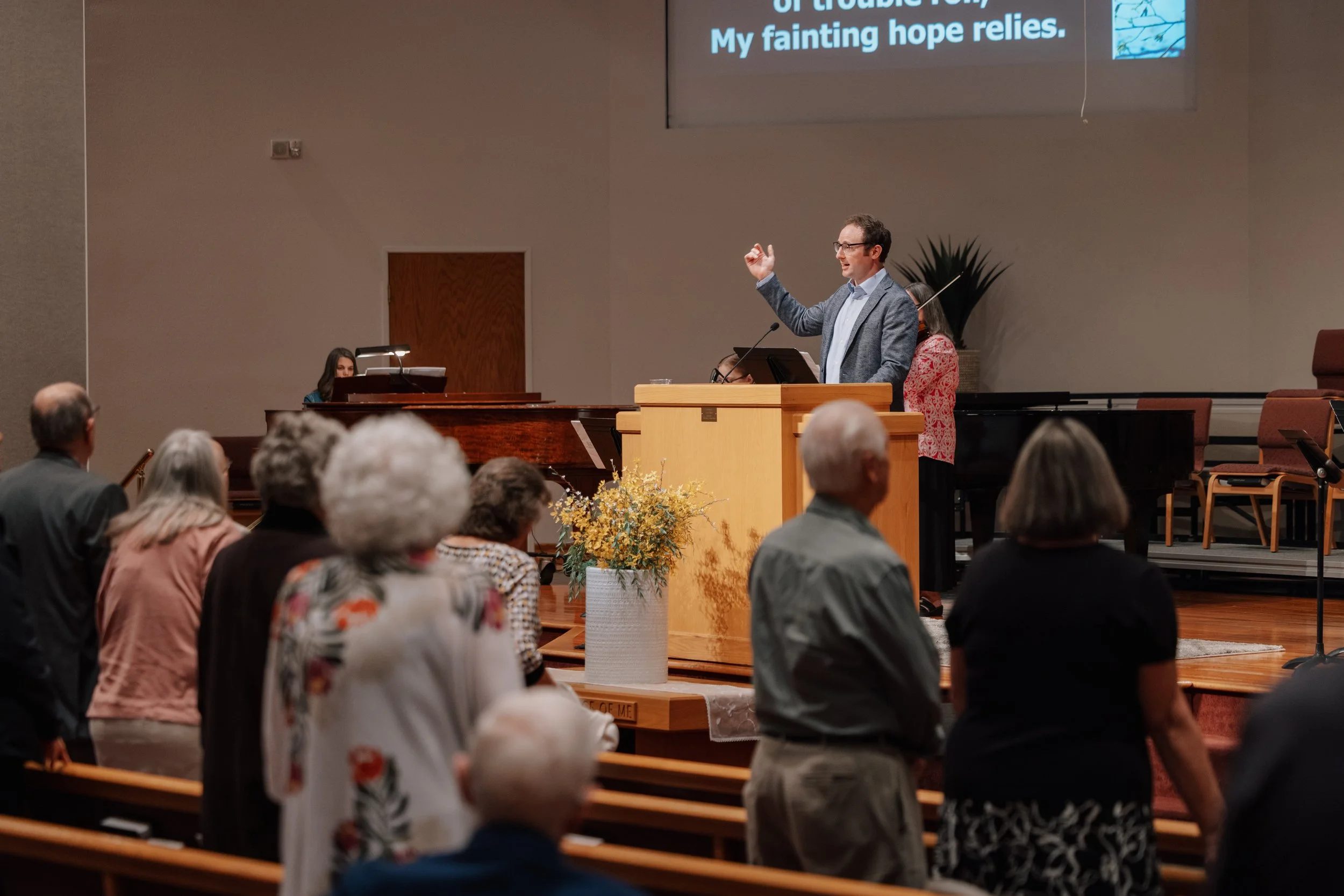
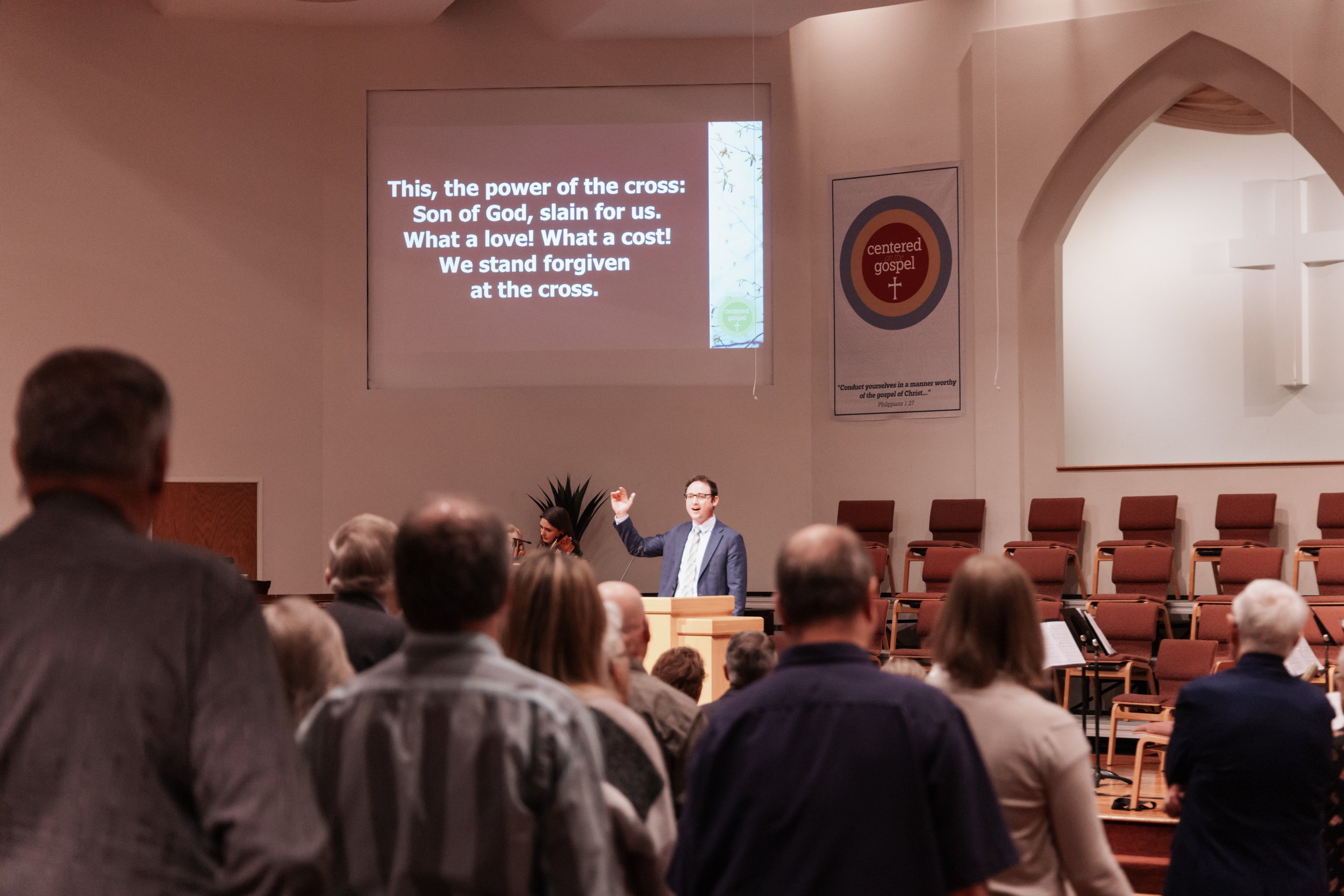
Amid all the differences between church services, one thing is pretty common - Christians sing. At a few points during the service, people will stand and sing together. Someone will lead the music, and he will instruct you when to stand and when to begin singing. The words will be on a screen or in a booklet, so you don’t need to memorize anything ahead of time.
The Bible tells us why singing is so common for Christians in Colossians 3:16, “Let the word of Christ dwell richly within you… singing with thankfulness in your hearts to God.” In simple terms, music helps ideas stick. Just like a song you can’t get out of your head, these songs are meant to help people “dwell on” or remember what they believe during the week—not just on Sunday. And it grows out of a grateful heart for what God has done for us.
Our music is pretty simple, with minimal instrumentation. That’s on purpose. We want to focus on the voices in the room rather than a performance on stage. Occasionally, a person or small group may sing on their own. Even then, it’s not meant to be a show—it’s more like someone sharing something meaningful to them through music.
-
At two points in the service, someone will pray out loud while everyone else listens. Prayer, at its core, is simply talking to God. During our morning services at Beth Eden, one person speaks on behalf of the room, and everyone else can follow along quietly if they want to. Who does it is planned ahead of time, so we won’t be looking for anyone (including you!) to participate in spontaneous prayer.
One of the prayers focuses on people outside the church—individuals and groups teaching about Jesus in different parts of the world. Before that prayer, you might receive a short note or update about them so you have a sense of what’s going on in their lives, and we give our members a chance to reach out to them through letters or email in order to build relationships.
The other prayer is led by a pastor and usually includes a few things: acknowledging who God is, admitting where people fall short, expressing gratitude, and asking for help with real-life situations.
Prayer is such a core part of a Christian’s relationship with God that the Bible encourages us: “With all prayer and petition pray at all times in the Spirit” (Ephesians 6:18). How we pray on a Sunday morning reflects our attitude toward constant prayer.
-
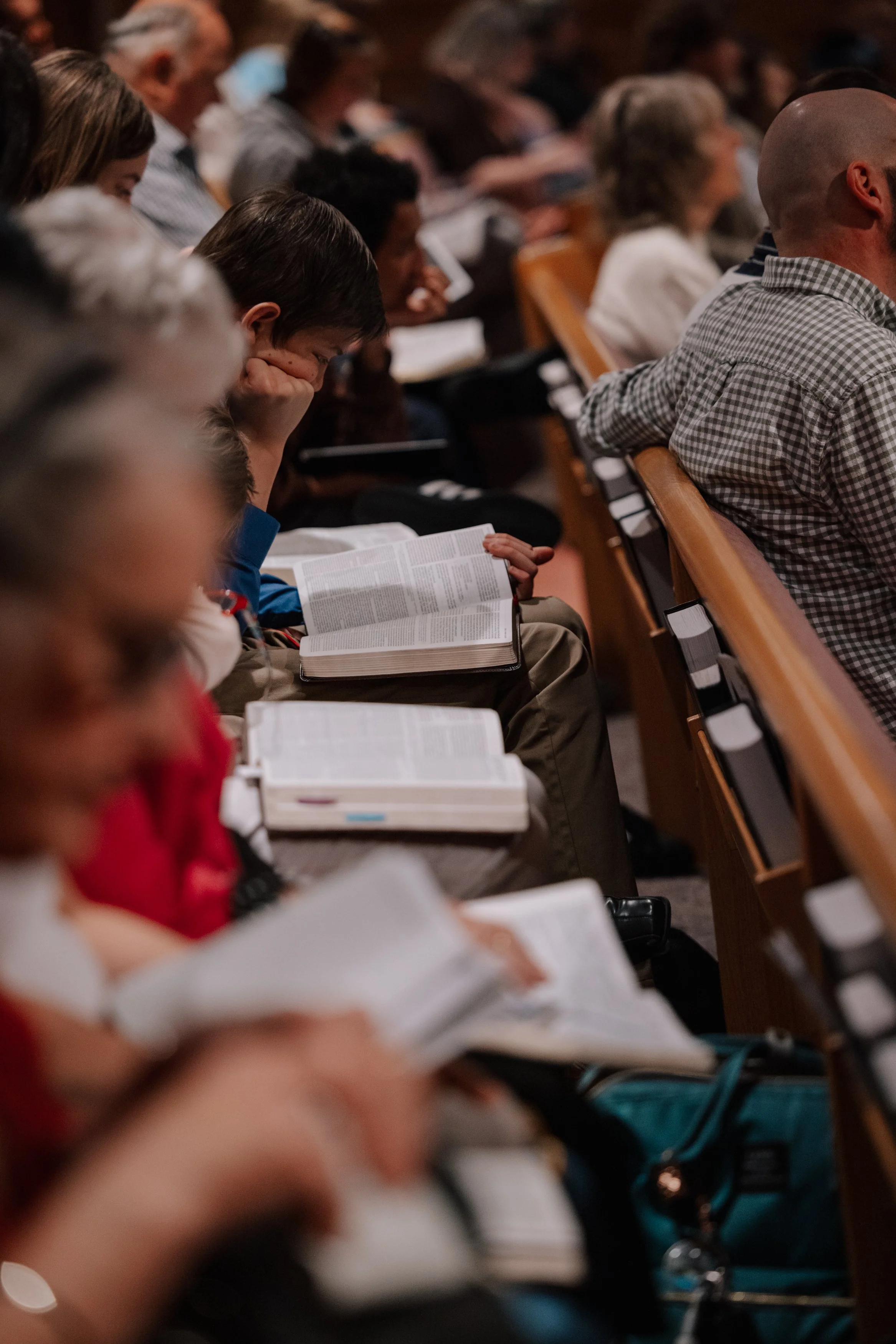
You’ll hear parts of the Bible read out loud a couple of times during the service. At the beginning, there’s usually a short passage that connects to a bigger theme the church is focusing on that year. Later on, there’s a longer reading—often from the Psalms, which are ancient poems and prayers that cover everything from joy to frustration to hope. Sometimes we ask the whole room to read together. If that feels uncomfortable, you can just listen instead. No one will single you out.
A simple, clear instruction found in the Bible drives us to do this: “Give attention to the public reading of Scripture” (1 Timothy 4:13). The idea is that hearing these words out loud—together—matters. Even if you’re not sure what you think about the Bible yet, this gives you a chance to hear it for yourself and start forming your own thoughts.
-
At some point, you may notice people placing money in a plate or box, or you might hear about online giving options. If you’re visiting, you can completely ignore this part. There’s no expectation for you to give anything.
For those who consider Beth Eden their church, giving is one way they support what happens here—things like paying staff, maintaining the building, and helping fund projects both locally and globally.
Regarding giving, Christians are instructed in 2 Corinthians 9:7 that “Each one must do just as he has purposed in his heart… for God loves a cheerful giver.” In other words, it’s meant to be voluntary, not pressured. If you’re new, the most helpful thing you can do is just be here and see what it’s all about.
-
The longest portion of the service is a talk from one of the pastors. They’ll take a section of the Bible, explain what it means in its original context, and then connect it to everyday life—things like relationships, stress, purpose, or decision-making.
The Bible gives us the reason for this in 1 Peter 4:6: “For the gospel has for this purpose been preached…that [we] may live in the spirit according to the will of God.” Christians are meant to have their lives shaped by the truth and wisdom found in the Bible. And so, the best thing we could do is take some time to listen to a portion of it explained and to be encouraged to change our thoughts, actions, and relationships to match it. If you’ve ever listened to a podcast or a talk that changed your mind or encouraged you to act differently, it’s a bit like that—just centered on the Bible.
You don’t need to bring anything with you, but if you want to follow along, there are Bibles available in the seats. There’s also usually a simple outline on the screens you can use to track where the message is going. No one expects you to already understand everything. The goal is clarity, not confusion. If something clicks, great. If something raises questions, that’s normal too. We’re happy to help explain anything that doesn’t make sense.
You can listen to one of our pastors’ previous sermons here.
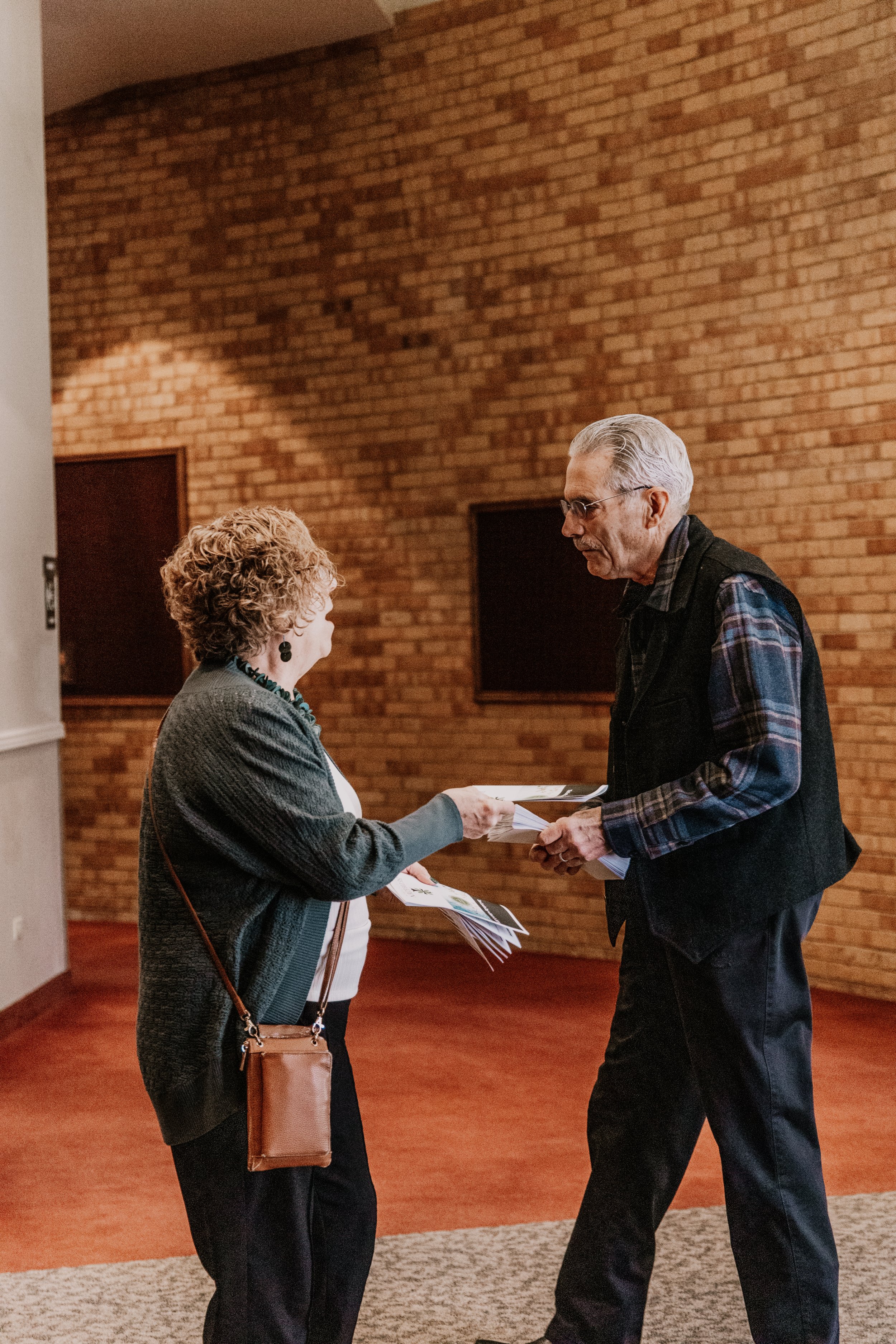
All of these pieces—singing, prayer, reading, giving, and the message—fit together to tell a bigger story about who God is and what Christians believe about Jesus.
So feel free to just observe, ask questions, and take it in at your own pace. The most important thing to know is this: you’re not expected to act like you’ve gone to church your entire life. Things may seem odd, but they have their reasons. If you do have questions, there are people available after the service who are genuinely happy to talk—no pressure, no prepared answers. You can also follow up later online if that feels more comfortable.
Showing up somewhere new can feel awkward. We get that. We hope that by the time you walk in, you’ll at least know what’s coming—and feel a little more at home.